Keynotes and Honorary Speakers

Please welcome our esteemed keynote and honorary speakers, individuals who embody expertise, passion, and transformative vision. Prepare to be inspired as they share their unique insights, perspectives, and experiences, and ignite the spark of innovation within each of us.


Honorary Speeches

Prof. Dr.-Ing. Jens SchneiderMay 12, 2027
Prof. Aydin NassehiMay 12, 2027
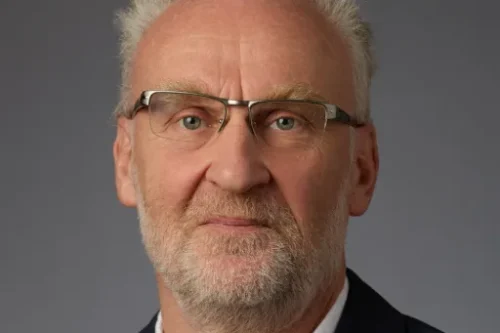
Dr. Jens Schneider, rector of the TU Wien

Prof. Dr.-Ing. Jens Schneider (TU Wien, Austria)

Jens Schneider studied civil engineering at TU Darmstadt and received his PhD in 2001. After completing his doctorate, he worked in the private sector in structural design and project management, contributing to major international construction projects.

In 2007, he returned to academia and became professor of structural analysis at TU Darmstadt in 2009. From 2017 to 2020, he served as Dean of the Department of Civil and Environmental Engineering. In 2020, he was appointed Vice President for Transfer and International Affairs at TU Darmstadt, where he was responsible for international cooperation, knowledge and technology transfer, and the coordination of the European University Alliance “Unite!”.

Since 1 October 2023, Jens Schneider has been Rector of TU Wien, one of Austria’s leading technical universities. In this role, he focuses on strengthening the university’s international visibility, expanding cooperation with European partners, and reinforcing the connection between excellent research, high-quality education and innovation.

As Rector, he represents TU Wien’s commitment to addressing technological, economic and societal challenges through science and engineering. He is particularly dedicated to supporting the next generation of researchers and engineers and to positioning TU Wien as a university that combines academic excellence with practical relevance and international responsibility.

Professor Aydin Nassehi (University of Bristol, United Kingdom)

Aydin Nassehi is Professor of Production Systems at the University of Bristol, where he serves as Head of the School of Electrical, Electronic and Mechanical Engineering, providing academic leadership for over 200 staff and 1,850 students. He is a Fellow of CIRP, the International Academy for Production Engineering, and Vice-Chair (incoming Chair from January 2027 subject to approval of CIRP Council) of its Scientific Technical Committee on Production Systems and Organizations (STC-O), having previously served as the Committee’s Technical Secretary and as Chair of CIRP UK. His research addresses digital manufacturing, manufacturing informatics and the application of artificial intelligence in manufacturing systems, with contributions spanning interoperable CNC manufacture, digital twins, reconfigurable and human-centric production systems, and generative approaches to manufacturing decision-making. He has published more than 190 papers, including the CIRP keynote paper ‘Daydreaming Factories’, and serves as Senior Editor of the International Journal of Computer Integrated Manufacturing. He is a long-standing UK expert on ISO committees developing standards for manufacturing data and smart machine tool systems.

Keynote Speeches

Prof. József VánczaMay 12, 2027
Univ.Prof. Jürgen StampflMay 13, 2027
Prof.Dr.ir. Eric LuttersMay 14, 2027

Prof. József Váncza (HUN-REN SZTAKI, Hungary)

József Váncza is Chief Advisor at the Institute for Computer Science and Automation (SZTAKI) and Honorary Professor at the Budapest University of Technology and Economics (BME), where he has taught for three decades. He received his PhD in Mechanical Engineering in 1994 and was a co-founder of SZTAKI’s Research Laboratory for Engineering and Management Intelligence.

His research focuses on artificial intelligence in engineering and manufacturing, cyber-physical production systems, human–robot collaboration, and cooperative and sustainable production in networks. He is Fellow and Vice President of the International Academy for Production Engineering (CIRP) and Fellow and Vice President of the International Academy of Engineering and Technology (AET).

His distinctions include the Knight’s Cross of the Order of Merit of the Hungarian Republic (2008), the Dennis Gábor Prize for Innovation (2021), and the Rudolf Kálmán Prize (2025). He has published more than 260 scientific papers and holds eight international patents. Former Chair of the Editorial Committee of the CIRP Annals (2024–2026), he currently serves as Associate Editor of several leading journals in manufacturing science and technology.

Univ.Prof. Jürgen Stampfl (TU Wien, Austria)

Jürgen Stampfl studied applied physics at the University of Technology in Graz and obtained his Dipl.-Ing. degree in 1993. After receiving the PhD degree in materials science from the University of Mining and Metallurgy in Leoben in 1996.

He worked as research associate at the Rapid Prototyping Lab at Stanford University, USA (1997-2000). In 2001 he joined the Institute of Materials Science and Technology, TU Wien, where he became associate professor for materials science in 2005 and full professor for “Materials and Additive Manufacturing” in 2017. Currently he is heading the research area “Polymers and composites” at TU Wien.

His expertise lies in the field of lithography-based additive manufacturing technologies and materials development (polymers, ceramics). He is co-founder of two start-up companies (Lithoz GmbH and Cubicure GmbH) providing 3D-printing equipment and materials. From 2015 to 2023 he was managing director of Cubicure. In 2013 and 2019 he received the Houska price, Austria’s most important award for translating research results into industrial applications. Together with Robert Liska, he received the H.F. Mark medal in 2021, honouring the research in material development for 3D-printing.

Prof.Dr.ir. Eric Lutters (University of Twente, Netherlands)

Eric Lutters is a full professor at the Faculty of Engineering Technology of the University of Twente. His chair, Information driven Product Development & Engineering focuses on making development and engineering cycles more effective and efficient by using the underlying information content as the main driver. 

The goal is to improve and support insightful decision making, empowered by smart engineers and by using/developing smart engineering tools/methods, while engaging all perspectives involved. The research addresses the crossroads of Mechanical Engineering, Industrial Design Engineering, and Industrial Engineering. In the work of the chair, the relation between research and education is seen as essential; education prospers if inspired by research results and approaches; likewise, research thrives on the input, involvement and pointed questions of eager learners.

Next to his position in Twente, Eric is also a professor extraordinary at the Department of Industrial Engineering at the University of Stellenbosch, South Africa.

  • Industrial Revolution Unfinished: AI and the Future of Manufacturing by Prof. József Váncza

    The presentation examines the evolution of industrial revolutions and manufacturing paradigms through the lens of technological knowledge, complexity, and the emerging role of artificial intelligence. It argues that sustained technological progress became possible through the accumulation of “useful knowledge,” combining scientific understanding with the practical capability to apply it. This perspective is connected to the early concept of intelligent manufacturing systems which already anticipated resilient, adaptive, and AI-supported manufacturing systems capable of operating under incomplete knowledge and unforeseen conditions. Remarkably, many of these requirements have remained unresolved, suggesting that the technological promises associated with the Fourth Industrial Revolution have not yet been fully realized.

    The simultaneous slowdown of productivity growth in highly digitalized economies further raises the possibility that increasing digitalization has created systems whose complexity exceeds our present ability to understand, control, and manage them effectively. There is hope that contemporary AI, including industrial foundation models and emerging alternatives to the “big data, big compute, big model” paradigms, can provide new ways to make efficient use of deficient knowledge and help complete the unfinished transformation of Industry 4.0. However, for generative AI to become a genuine general-purpose technology (GPT), it must demonstrate that it can reliably represent engineering knowledge, solve constrained and mission-critical problems, interact with physical and scientific models and legacy systems, and deliver measurable improvements in innovation and productivity.

    Two complementary trajectories of manufacturing evolution can therefore be distinguished: the progression to Industry 4.0 and beyond through the incorporation of successive GPTs, and the evolution of manufacturing paradigms toward increasingly deep incorporation of material, physical, and potentially quantum-level knowledge. AI may serve as the capstone of the first trajectory by turning digitalization into genuinely intelligent and adaptive manufacturing, while its contribution to the second trajectory could extend toward scientific discovery, hypothesis generation, and new forms of physics-based engineering. The presentation therefore poses a central question for future manufacturing roadmaps: Can AI not only complete the unfinished agenda of intelligent manufacturing, but also drive a quantum leap in engineering and manufacturing science itself?

  • Research in Materials Science for 3D Printing – Learnings from Translation into Industrial Applications by Prof. Jürgen Stampfl

    This presentation highlights the development of advanced photopolymers for additive manufacturing (AM), fulfilling the specific demands of real-world applications in biomedical engineering and electronics. A central theme throughout the presented work is the experience that material design must be driven by application requirements, motivating the development of photopolymers that combine high strength, toughness, processability, and long-term mechanical reliability.

    An application area of large interest are patient-specific medical devices and implants, a field were toolless manufacturing methods like AM can shine. Clinical examples include the use of 3D-printed cutting guides and customized bioceramic implants for bilateral sagittal split osteotomy, enabling precise surgical planning and clinically successful bone reconstruction.

    In the field of polymeric materials, AM has proven to be of high value in digital dentistry. Specifically in orthodontics, additively manufactured devices are used to improve clinical outcomes and practice efficiency. Such examples demonstrate how advances in material performance directly translate into improved patient care and the broader adoption of personalized medical solutions.

    To support such demanding applications, the presentation addresses the fundamental challenge of optimizing mechanical properties of photocurable polymers without sacrificing economic constraints or manufacturability. Using a process developed at TU Wien (Hot Lithography), a technology capable of processing highly viscous resins was made accessible which significantly expands the range of material formulations that can be printed. The challenges associated with translating academic research and intellectual property into spin-off companies will be targeted.

    The combined use of advanced polymer chemistry, microstructural engineering, and composite reinforcement illustrates a pathway toward additively manufactured components with properties approaching those of conventional engineering materials, opening opportunities in electronics as well as in medical and industrial applications.